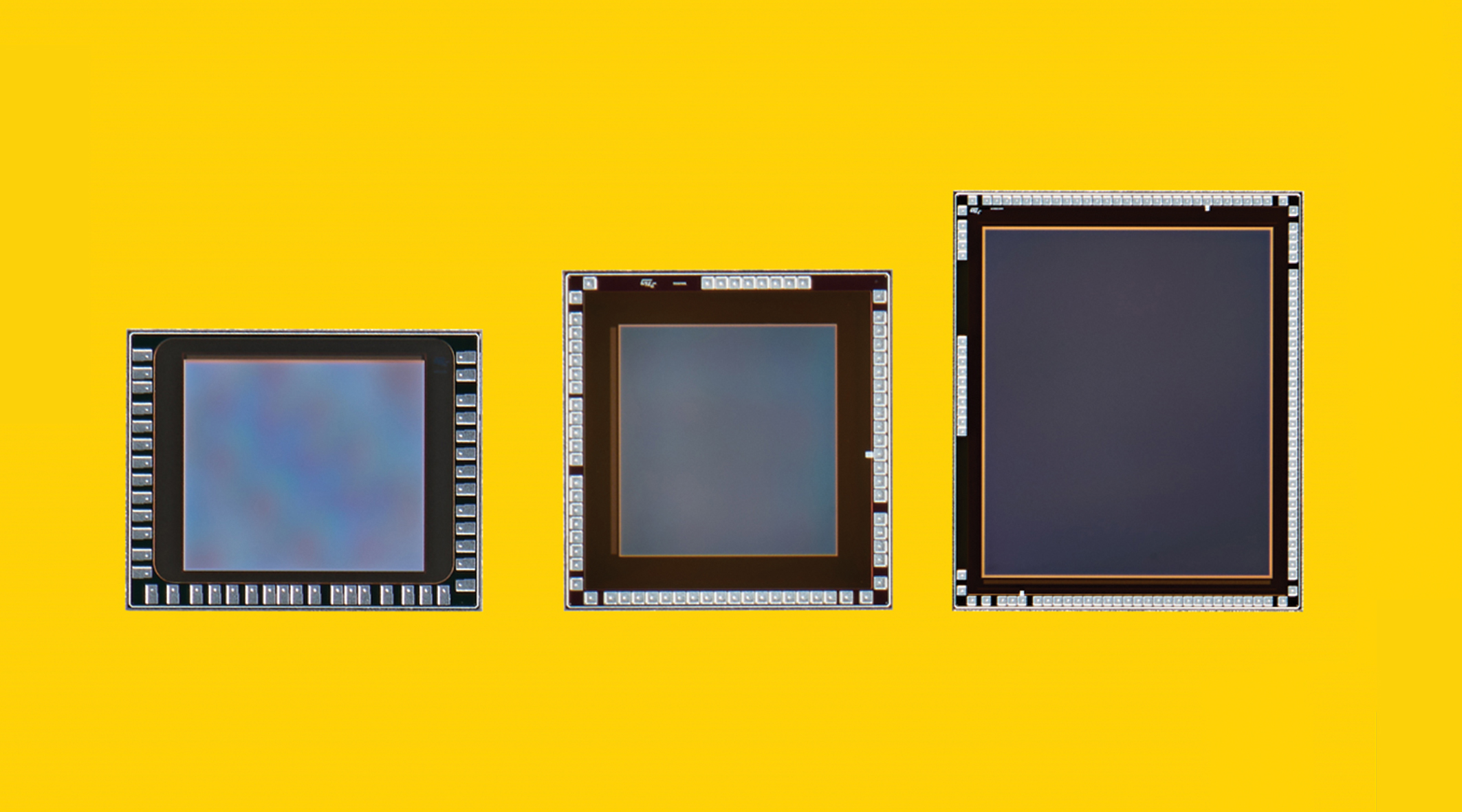
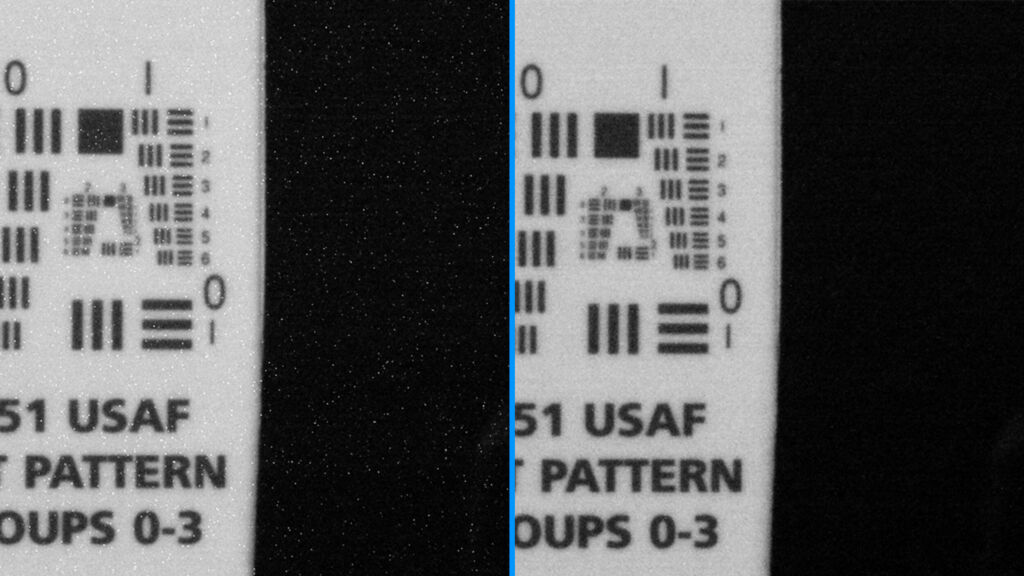
SWIR sensors based on InGaAs technology are prone to pixel defects, which become visible as white or black dots in the image. This effect is amplified by longer exposure times and increased sensor temperatures. Therefore, SWIR sensors with thermoelectric cooling (TEC) are often used in SWIR applications, which, however, has a negative impact on the size and price of the cameras.
Pixel Correction Beyond takes a different approach on Basler’s ace 2 X visSWIR cameras with uncooled SWIR sensors. The patented algorithm performs dynamic pixel correction that continuously works with each image while the application is running. It can therefore react instantly to changing conditions to correct newly emerging defective pixels. The algorithm detects and corrects defective pixels by adjusting their values to match the direction and intensity of the surrounding pixels. Such pixel operations are very computationally intensive. Therefore, the Pixel Correction Beyond algorithm is implemented on the camera’s FPGA and thus generates no additional CPU load.
By incorporating the image content, Pixel Correction Beyond goes beyond conventional dynamic pixel correction and offers flexible adjustment of the correction strength, better correction of structures at the edges while preserving image detail, and the potential correction of blinking pixels with variable saturation. The algorithm ensures a uniform and consistent image and thus significantly improves SWIR image quality.
Most SWIR applications use exposure times of less than 10 ms. In these applications, cameras with uncooled SWIR sensors deliver comparable image quality to cameras with cooled SWIR sensors. In applications with longer exposure times, the dark current increases and image quality decreases. In these cases, external, fanless cooling can be used to reduce the sensor temperature and thus the dark current. Examples of this include passive cooling fins or a forced-air cooler. With this combined solution of external cooling and the Pixel Correction Beyond algorithm, image quality comparable to that of cameras with cooled SWIR sensors can be achieved, depending on the application – and at a much more attractive price-performance ratio.
www.baslerweb.com